The day itself
A wedding is not photographed to the minute. But it is planned to the minute — and it is always in the same places that the day starts to strain.
Here is the shape of a day as I photograph it, from the first coffee to the first dance. The times assume an early-afternoon ceremony: shift everything to match yours. What matters is not the exact hour, it is how long each block takes and the order they come in.
9.30 amThe bride gets ready
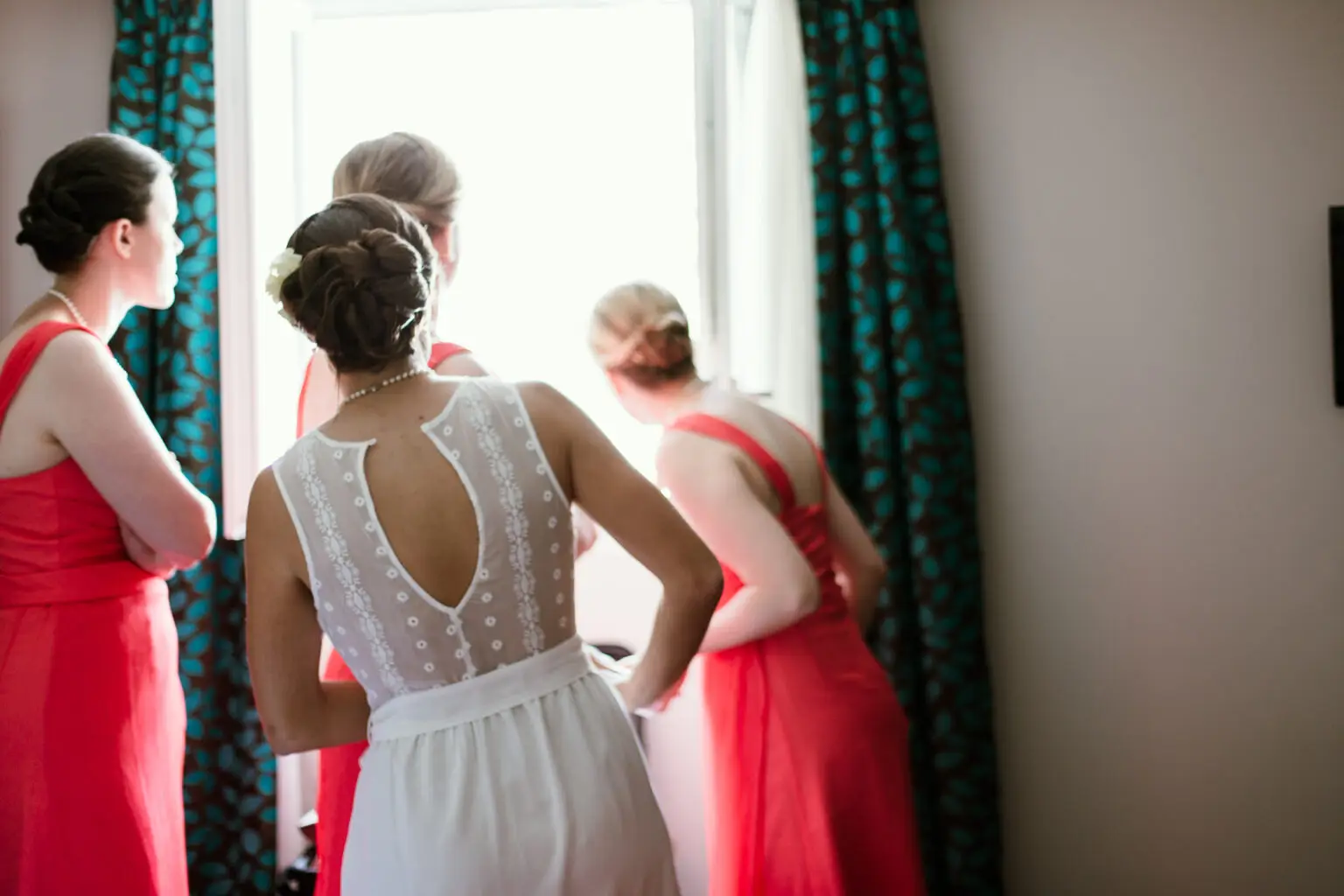
Allow two hours before you leave. That isn’t indulgence: it is what it takes for the room to settle, for the window light to be usable, and to photograph the details without rushing — the dress on its hanger, the shoes, the jewellery, the letter nobody has read yet.
One piece of advice that changes everything: pick a tidy room near a window, and get the suitcases out of it. Getting-ready pictures are ninety per cent down to the choice of room.
11.00 amThe groom
Thirty to forty-five minutes, usually compressed into ten. Which is a shame: the tie knotted three times, the father adjusting a jacket, the best men opening a beer — it makes good pictures and it balances the story of the day.
If the two parties are getting ready more than twenty minutes apart, you have a choice to make: cut it short, or add a second shooter. It is the one moment of the day when a second photographer genuinely earns their place.
12.15 pmThe dress, and the moment it closes
This is the emotional peak of the morning: the mother, the sister, the oldest friend, and the silence that drops all at once. Allow twenty minutes, not five.
The classic mistake is putting the dress on at the last second, in a panic, because the morning has already slipped. You lose the pictures and the moment itself.
1.15 pmLeaving, and arriving
Journeys are always underestimated. Between the house, the town hall and the church, add fifteen minutes to every leg: there is always a dress to fold into a car, a parking space that doesn’t exist, a guest who doesn’t know where to go.
The arrival outside the venue is very photogenic — and the first thing lost when everyone is running.
2.00 pmThe ceremony
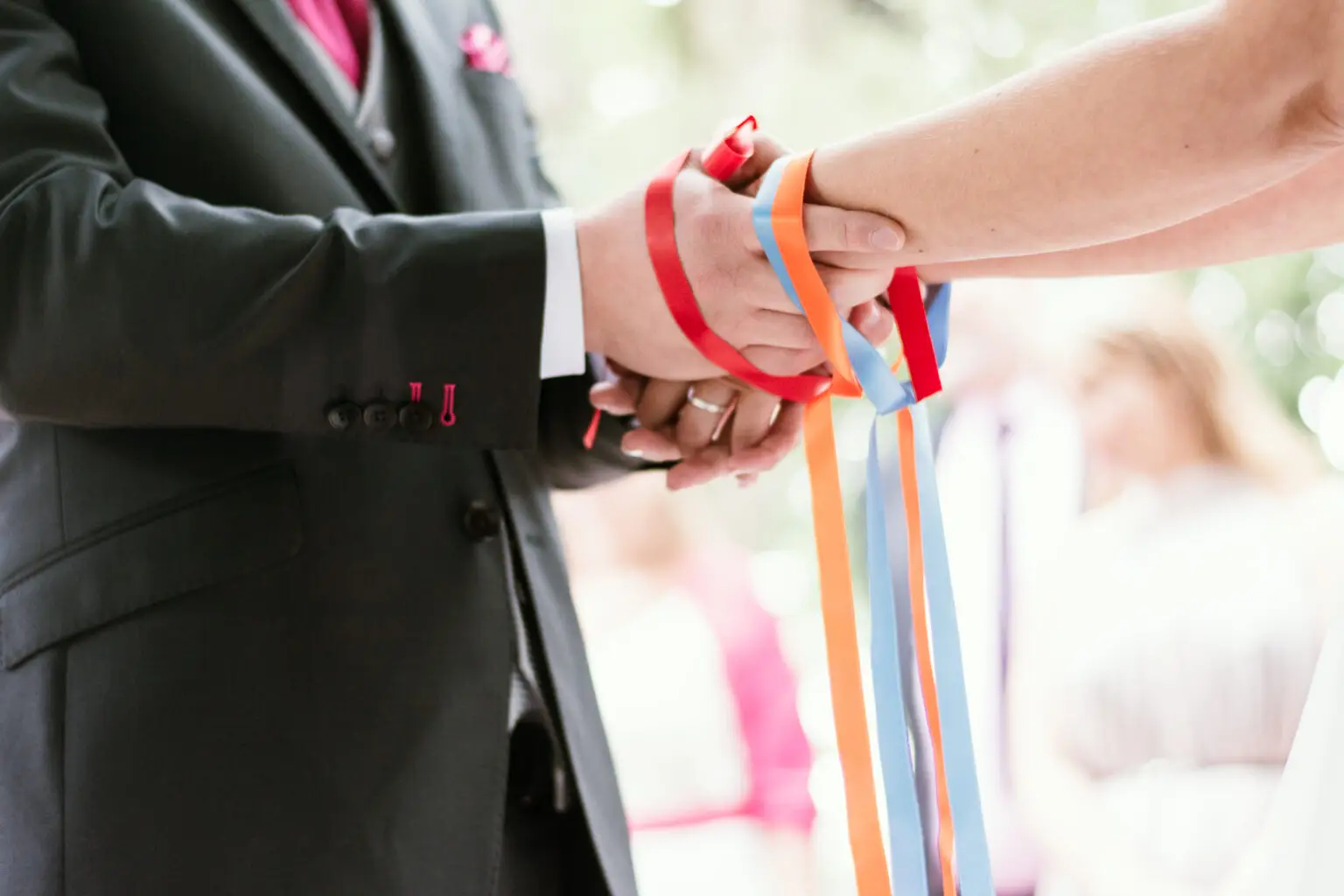
Allow twenty to thirty minutes for a civil ceremony at the town hall, forty-five minutes to an hour and a quarter for a religious or celebrant-led one. French town-hall wedding rooms are often small and dark, with very little room to move: better to know that beforehand, not on arrival.
Ask the officiant or celebrant where the photographer may stand. Some churches rule out the chancel, others the communion. A phone call settles it — never the morning itself.
3.15 pmThe exit
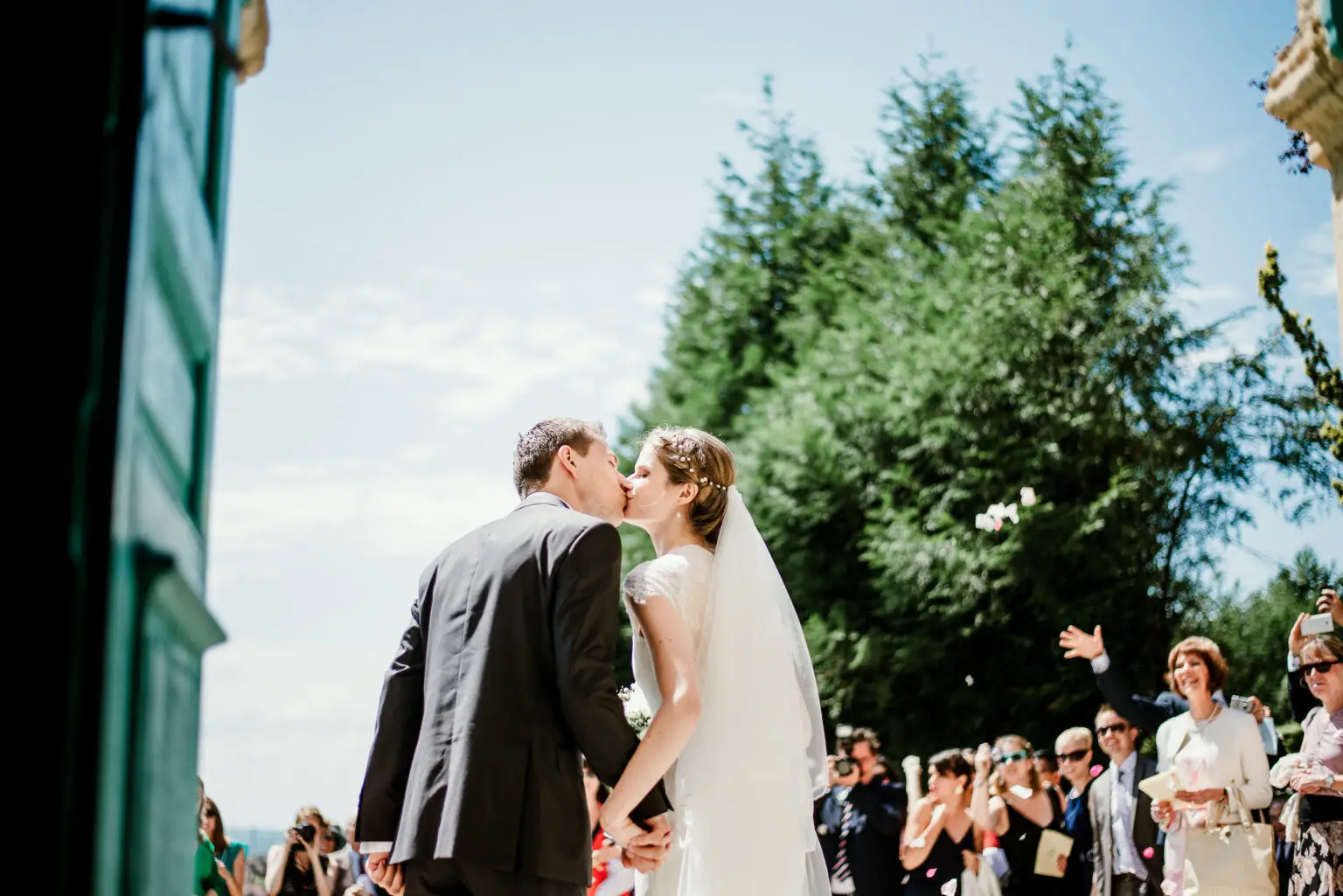
The most anticipated moment of the day lasts two minutes. Petals, rice, bubbles, balloons, smoke flares: tell the photographer what is planned, because they do not stand in the same place for each.
And ask guests not to crowd the aisle: too tight a guard of honour and the couple disappear inside it.
3.30 pmThe group photographs
Twenty to thirty minutes, no more. Past eight groupings it becomes a chore for everyone, and it shows on their faces.
Two rules that save a quarter of an hour: a written list handed over the day before, and a friend with a carrying voice to call out the names. The photographer doesn’t know your family. They do.
4.15 pmThe drinks reception
An hour and a half to two hours, and the richest seam of pictures in the whole day: this is when guests forget the camera. The reunions, the children running, the laughter caught sideways.
One piece of logistics that matters: do not schedule the photographer’s meal here. If they eat during the reception, you will not have these photographs.

A good timeline is invisible. You feel it in the evening, when nobody has had to run.
6.30 pmThe couple session
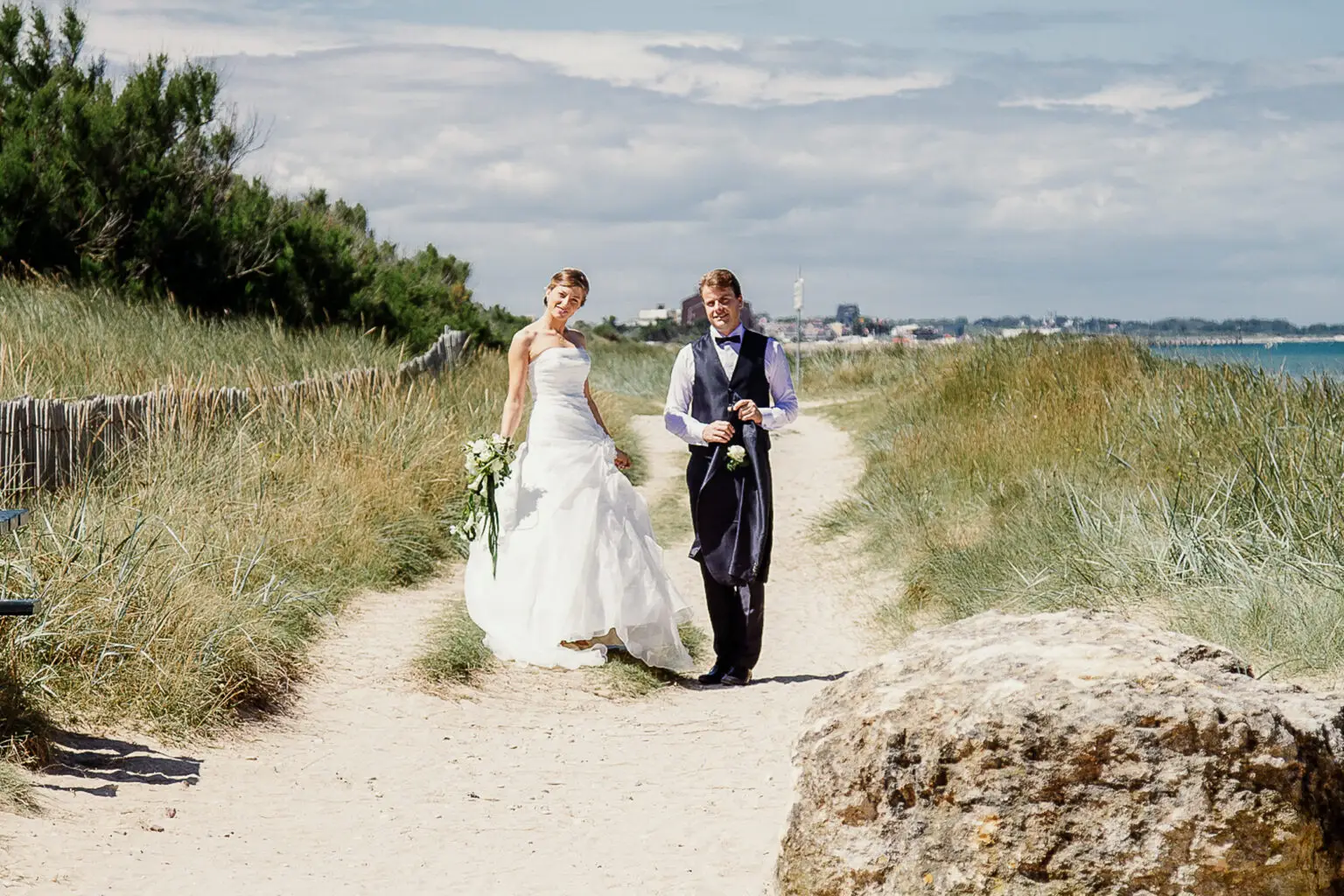
Thirty to forty-five minutes, set by the light rather than the schedule. In Normandy the right hour falls around 8.30 pm in June and around 5.30 pm in October: the light decides, and the timeline adapts.
By the sea you also have the tide to work around. In this wedding, the session happened in the cloister between two groups of tourists, because that is where the light was.
8.00 pmDinner
Put the photographer’s meal in the seating plan, served at the same time as yours or just before. A photographer eating through the speeches misses the speeches — and speeches do not get a second take.
Starters, main course, surprise performances: ask the caterer for a running order, however rough.
11.00 pmThe first dance, and after
Artificial light, flash owned rather than hidden, grain. It is a different kind of writing from the rest of the day, and all the better for it.
Once the first dance and the twenty minutes that follow are done, the returns drop sharply: the frames start to repeat. That is usually the right moment to let the photographer go, rather than paying for two more hours of the same picture.
What derails a timeline
Three causes, almost always the same: journeys underestimated, group photographs with no written list, and the dress put on too late because the morning slipped. The rest absorbs itself.
A timeline is not a contract, it is a safety net. It exists so that nobody has to look at their watch — you least of all.
Choosing the right person to hold it comes first: the twelve questions to ask before you book.